
Ready-to-Wear Sarees 101: A Beginner’s Guide to Wearing Six Yards with Ease

The Real Cost Comparison Nobody Talks About
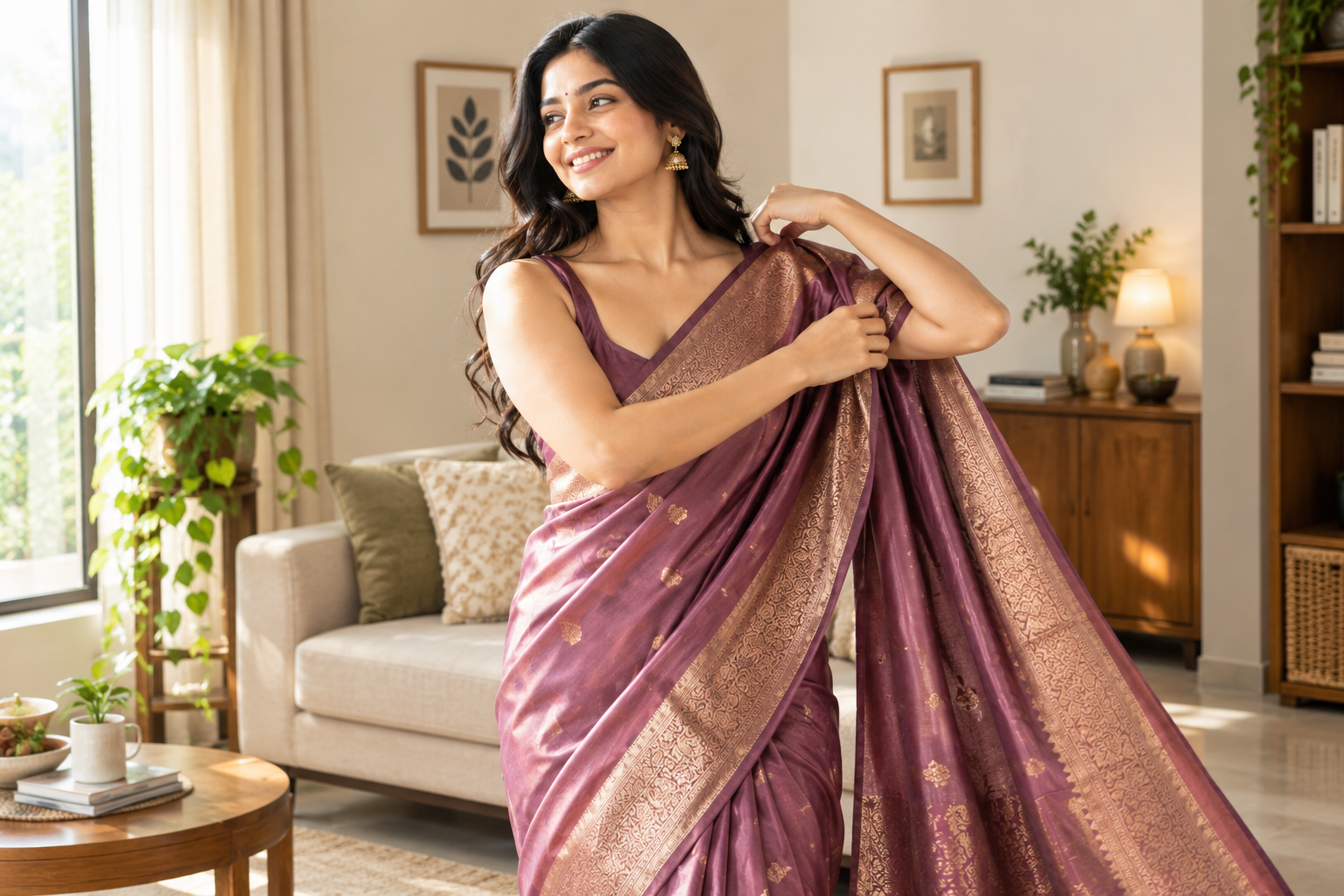
When people compare a traditional saree to a ready-to-wear one, they usually compare only the sticker price. That misses most of the actual cost. A traditional saree’s real price includes the fall stitching fee, the blouse tailoring fee, the transport to and from the tailor twice, and — the part that never shows up on a receipt — the hours of your own time and the mental space of tracking whether it’ll be ready in time. Add all of that up honestly, and the gap between the two options narrows considerably.
A Quick Checklist Before You Buy Your First One
Confirm the fall is already finished, confirm what’s included with the blouse (fabric, size range, whether it’s stretch-fit), check the estimated delivery window against your event date with a few days of buffer, and read the return or exchange policy in case sizing needs a small adjustment. Five minutes of checking here saves the same scramble a traditional saree would have caused anyway.Ready-to-Wear Sarees 101: A Beginner’s Guide to Wearing Six Yards with Ease
“Ready-to-wear saree” shows up in a lot of searches from women who want to wear a saree but have heard just enough about tailors, fittings, and draping lessons to feel intimidated before they’ve even started. If that’s you — good news, this entire category exists to solve exactly that problem.and then it sits, untouched, for months, because the gap between owning it and actually wearing it felt too big to close on a normal week. Ready-to-wear exists to shrink that gap to almost nothing.
What Does “Ready-to-Wear” Actually Mean for a Saree?
In the simplest terms, a ready-to-wear (sometimes called pre-stitched) saree is one that arrives with the time-consuming preparation already done — the edges finished, the fall stitched in, and often the pleats or blouse pre-attached in some form, so there’s little to no extra tailoring needed before you can wear it.
Traditional Saree vs. Ready-to-Wear: What’s Actually Different
A traditional saree is sold as raw fabric — beautiful, but unfinished. You’re expected to get the fall stitched, have a blouse custom-made to your measurements, and either learn to drape it yourself or have someone drape it for you each time. A ready-to-wear saree compresses all of that into the moment you open the box.
It helps to picture the actual timeline difference. Buying a traditional saree for an event ten days out usually looks like: purchase, then a trip to get the fall stitched (two to four days), then a blouse fitting appointment, then a second fitting if the first wasn’t quite right, then finally trying the whole thing on together for the first time — often the night before. A ready-to-wear saree collapses that entire timeline into: it arrives, you open it, you wear it.
How Shukra’s Ready-to-Wear Sarees Work
Every Shukra saree comes with the pico fall already finished and pairs with the stretchable Magic Blouse — no tailor, no fitting appointment, no waiting. You still drape it yourself (it’s not a pre-stitched, one-piece “instant” saree in the most literal sense [confirm exact product mechanics before publishing]), but every step that used to require someone else’s schedule has been removed.
Who Ready-to-Wear Sarees Are Really For
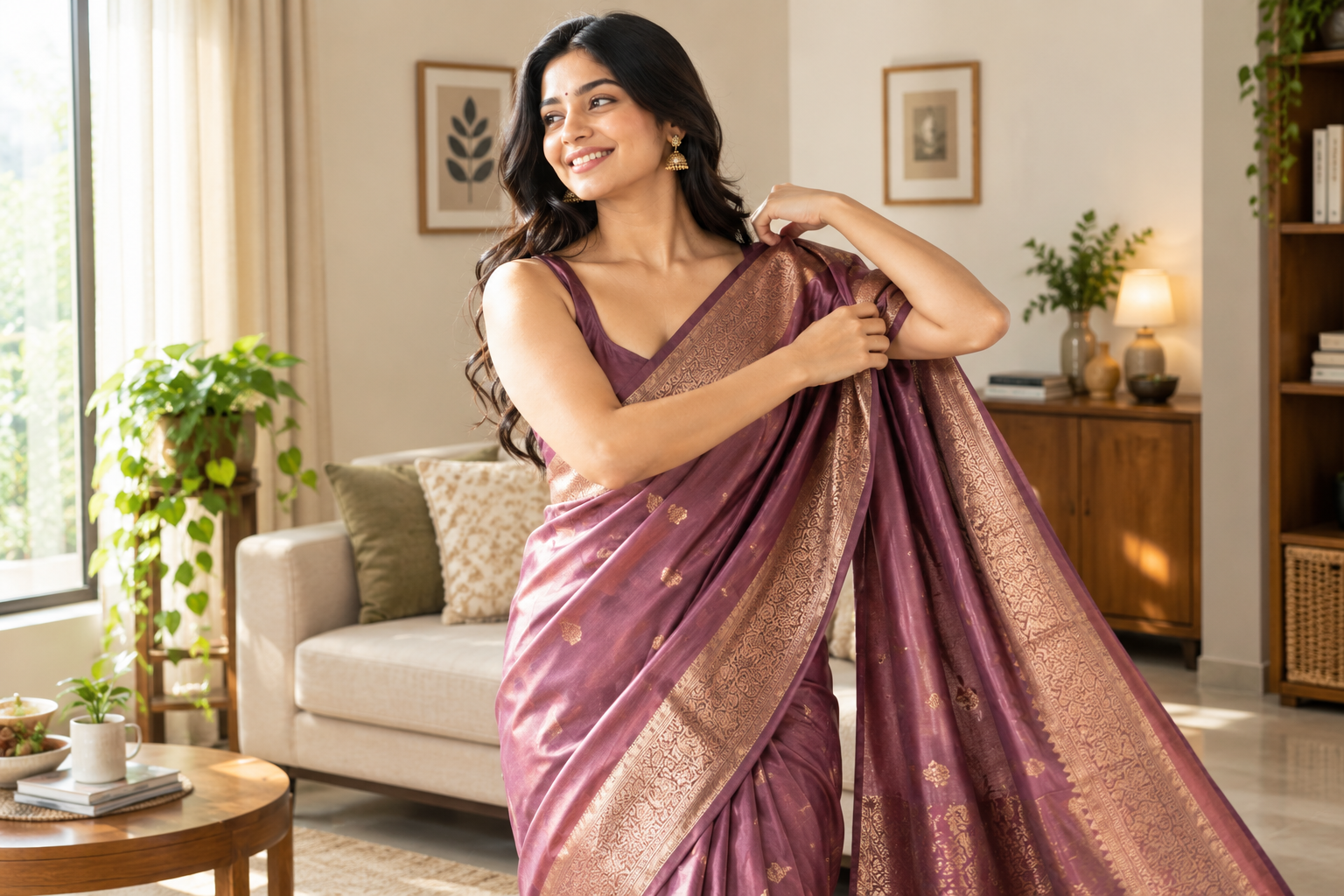
First-time wearers who don’t want to commit to a full tailoring process before they even know if they like wearing a saree. Anyone buying on short notice for an event a few days out. People who travel and can’t rely on local alteration services. And honestly, anyone who’s simply tired of the extra steps traditional sarees demand.
It’s also worth naming a group that rarely gets mentioned in these guides: women returning to sarees after years away from them — after a body change, a move, a long gap since the last wedding they attended — who don’t want to relearn an entire fitting process just to feel like themselves again. Ready-to-wear removes the re-entry cost entirely.
What to Actually Expect When It Arrives
Unbox it, and you should be able to see immediately that the fall is done and the blouse is
Frequently Asked Questions
Is a ready-to-wear saree less authentic than a traditional one?
No — the fabric, weaving, and printing techniques are the same. What’s different is the finishing and preparation, not the craft itself.
Can a ready-to-wear saree still be draped in different styles?
Yes, in most cases — the pre-finishing affects preparation time, not your ability to experiment with different drape styles.
Is a ready-to-wear saree comfortable for long events like weddings?
That’s the whole point of the stretchable blouse and properly weighted fall — both are designed specifically to hold up comfortably through long wear.
Is ready-to-wear only for beginners, or do experienced saree-wearers use it too?
Plenty of experienced wearers choose it too — mostly for the time it saves, not because they need the ease of draping. Removing the tailor step is valuable no matter how many sarees you’ve worn before.
Ready to try one for yourself? Shop ready-to-wear sarees →
We’d Love to Hear From You
Chapter Two is already taking shape, and we’re building it with people who read all the way to the end of a blog post — which, if you’re here, is you.
Subscribe below and you’ll hear about new sarees, new stories, and new chapters before anyone else does. And if you have a thought, a question, or something you’d like us to write about next, don’t keep it to yourself — we read every message.