
Saree vs. Everything Else: Why We Started Here and Not Somewhere Easier

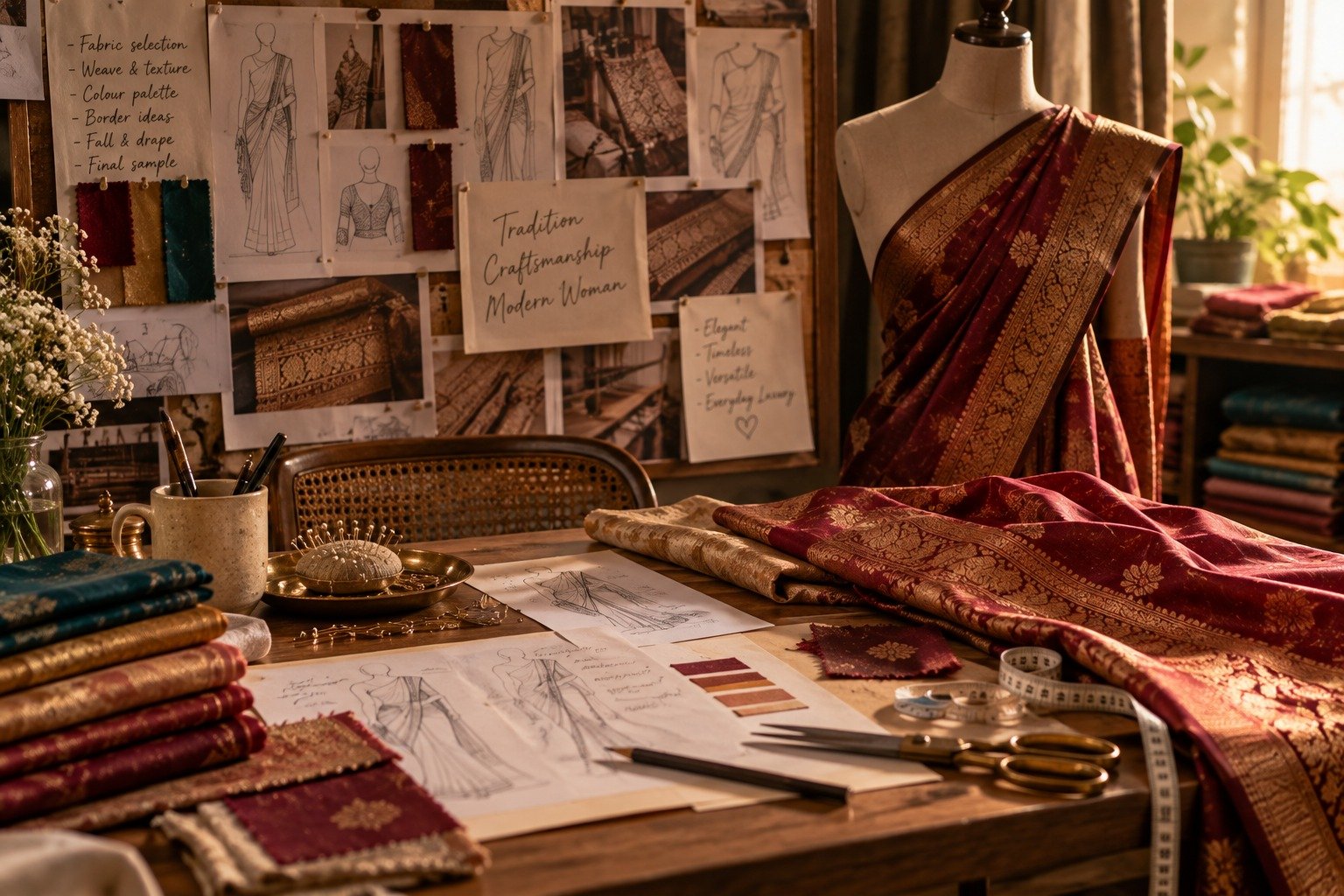
There were easier places to start. Kurtas fit off the rack. Accessories don’t require draping lessons. Western wear has decades of standardized sizing behind it. We picked the saree anyway, and it wasn’t an accident.
The Easier Roads We Didn’t Take
Almost every piece of advice you’d get starting a fashion brand points away from the saree — it’s harder to size, harder to standardize, harder to make “easy” in the way modern shoppers expect. On paper, it’s the hardest possible first product.
There’s a version of this company that launches with T-shirts or scarves — genuinely easier to manufacture, easier to size, easier to ship without complaint. That company probably grows faster in year one. It also never has to solve a single hard problem, which means it never actually stands for anything either.
Why the Hardest Garment Felt Like the Right One
But the saree is also the garment that says the most — six yards worn by grandmothers, brides, and CEOs alike, carrying more regional history and personal identity than almost anything else in a wardrobe. If our whole premise was “reveal, don’t disguise,” starting with the garment least likely to disguise anyone felt less like a risk and more like the only honest option.
What “Starting Here” Actually Taught Us
Solving for the saree first — the pico fall, the Magic Blouse, all the friction we removed — means everything we build next inherits that same standard. It would have been easier to start simple and work up to something hard. We’d rather have started hard and let everything after this feel, by comparison, effortless.
What This Means for What Comes Next
Every future chapter — whatever it ends up being — gets measured against the same bar the saree set: does it remove friction, or does it just add another product to a catalogue? That’s the actual inheritance of starting hard. Not a harder company. A more honest filter for everything that follows.
What We’d Say to Anyone Considering the Easier Path
If you’re building something and weighing an easier first product against a harder, more meaningful one, here’s the honest version of what nobody tells you: the easier path grows faster in the short term and teaches you less about what you’re actually capable of. The harder path is slower out of the gate and forces every subsequent decision to meet a standard you can’t fake your way around. We’d make the same choice again, knowing exactly how much slower it made year one.
Why We’re Telling You This At All
Most brands don’t talk about the road not taken — it’s more comfortable to just tell the story of the road you did take, as if it were obvious all along. It wasn’t. We considered the easier categories seriously, more than once, especially in the months when the saree’s complexity was making everything take longer than planned. Being honest about that hesitation felt more useful to you than pretending the decision was effortless.
What We’d Tell Ourselves If We Could Go Back
Probably nothing, honestly. Every delay the saree caused — every extra month spent getting the pico fall and the Magic Blouse actually right — became a standard we couldn’t quietly lower for anything that came after. That’s a strange kind of gift to give your future self: a first product hard enough that everything else has no choice but to meet it.
The saree was never the easy choice. It just happened to be the true one.
See where that decision led → Shop the collection
We’d Love to Hear From You
Chapter Two is already taking shape, and we’re building it with people who read all the way to the end of a blog post — which, if you’re here, is you.
Subscribe below and you’ll hear about new sarees, new stories, and new chapters before anyone else does. And if you have a thought, a question, or something you’d like us to write about next, don’t keep it to yourself — we read every message.