Why the Deer? Decoding the Symbol on the Shukra Emblem

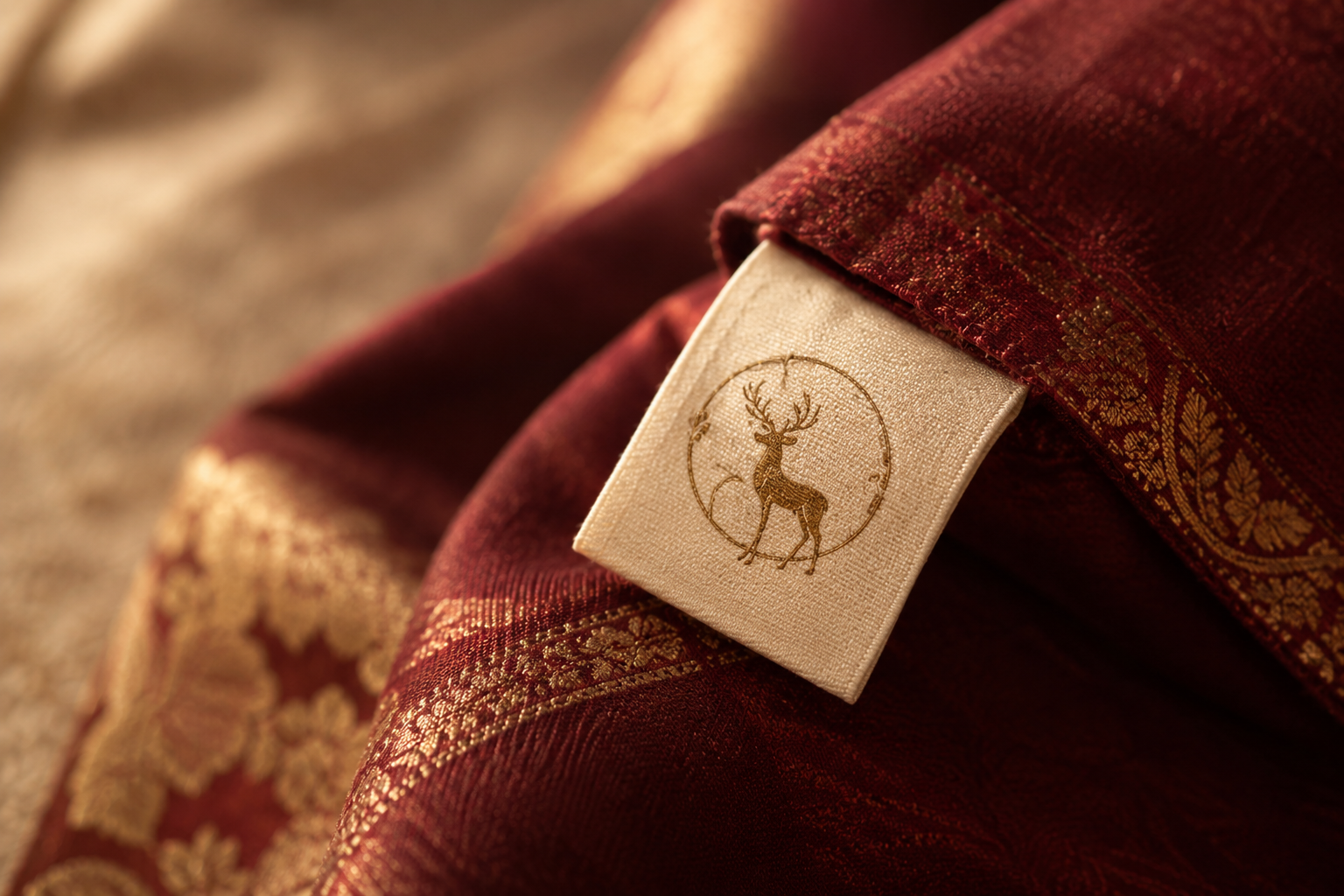
If you’ve held a Shukra box in your hands, you’ve probably noticed it before you could name it: a small deer, standing quietly at the centre of our emblem. It’s not decorative filler. It’s the whole philosophy of this brand, drawn in one line.
Look closely and it’s never posed mid-leap or rearing up to catch your eye. It’s simply standing, present, entirely unbothered by whether anyone’s looking. That stillness is doing more work than a dramatic symbol ever could.
The Animal We Chose, and the Ones We Didn’t
We could have picked a peacock — dramatic, showy, built to be looked at. We could have picked a lion — powerful, commanding, impossible to ignore. Both are common in Indian design, and both would have said something true about fashion. Just not the thing we wanted to say.
A deer doesn’t perform. It doesn’t check who’s watching before it moves. It crosses a clearing the same way whether the clearing is empty or full, and somehow that’s exactly what makes it beautiful to watch. That’s the quality we wanted our name and our logo to promise: not glamour, but grace that isn’t trying to be noticed.
There’s a reason this particular kind of quiet confidence tends to land harder with women than with almost anyone else. So much of what gets called “grace” in fashion is actually its opposite — a carefully held pose until the photo is taken, an exhale only once the room stops watching. A deer never does that math. It’s graceful in the empty clearing and the crowded one, identically, because it was never performing in the first place.
What “Graceful Without Trying” Actually Looks Like
This isn’t just a nice sentence for a mood board. It’s a working standard. Every piece we design gets measured against one question: does it ask the person wearing it to perform, or does it just let them move? A saree that needs constant adjusting, a blouse that needs to be “managed” through an event, an outfit that only works if you’re standing still and posed — that’s the opposite of what the deer stands for. If it asks you to perform, it isn’t finished.
The Deer Test We Run On Every Saree
In practice, that standard shows up in small decisions you might never notice: a pico fall so the edge doesn’t need pinning, a blouse built to stretch instead of requiring alterations, pleats that hold their shape without a safety pin army. None of it is loud. All of it is in service of the same idea — the less you have to think about your clothes, the more of you actually comes through.
We ask an unglamorous question of every design before it ships: would this survive a real evening — sitting down at a crowded dinner table, reaching for someone’s hand, moving without thinking about it? If the honest answer is “only if she stands still,” it goes back to the drawing board.
Is the deer based on a specific animal or region in India?
It’s meant to be universal rather than tied to one specific species or region — a symbol of grace and quiet confidence anyone can recognise, not a literal mascot.
Does the deer connect to a particular myth or deity?
Deer appear throughout Indian art and storytelling as symbols of gentleness and grace. We drew on that broader association rather than any single specific story.
Why not a more conventionally “feminine” symbol, like a lotus or a peacock?
Both are beautiful, and both appear widely in Indian textile art — we simply wanted a symbol that represented a feeling rather than a gender. Grace was never something only women needed to perform, which is part of why the deer felt right for everyone the brand is built for.
So the next time you spot that small deer on a tag or a box, you’ll know it’s not there to look pretty. It’s there to hold us to a promise: if it isn’t graceful without trying, it isn’t ready to carry our name.
Curious what that standard looks like in an actual saree? Explore the collection →https://shukra.store/shop/
We’d Love to Hear From You
Chapter Two is already taking shape, and we’re building it with people who read all the way to the end of a blog post — which, if you’re here, is you.
Subscribe below and you’ll hear about new sarees, new stories, and new chapters before anyone else does. And if you have a thought, a question, or something you’d like us to write about next, don’t keep it to yourself — we read every message.