
Saree Care 101: How to Keep Silk and Block Print Looking New

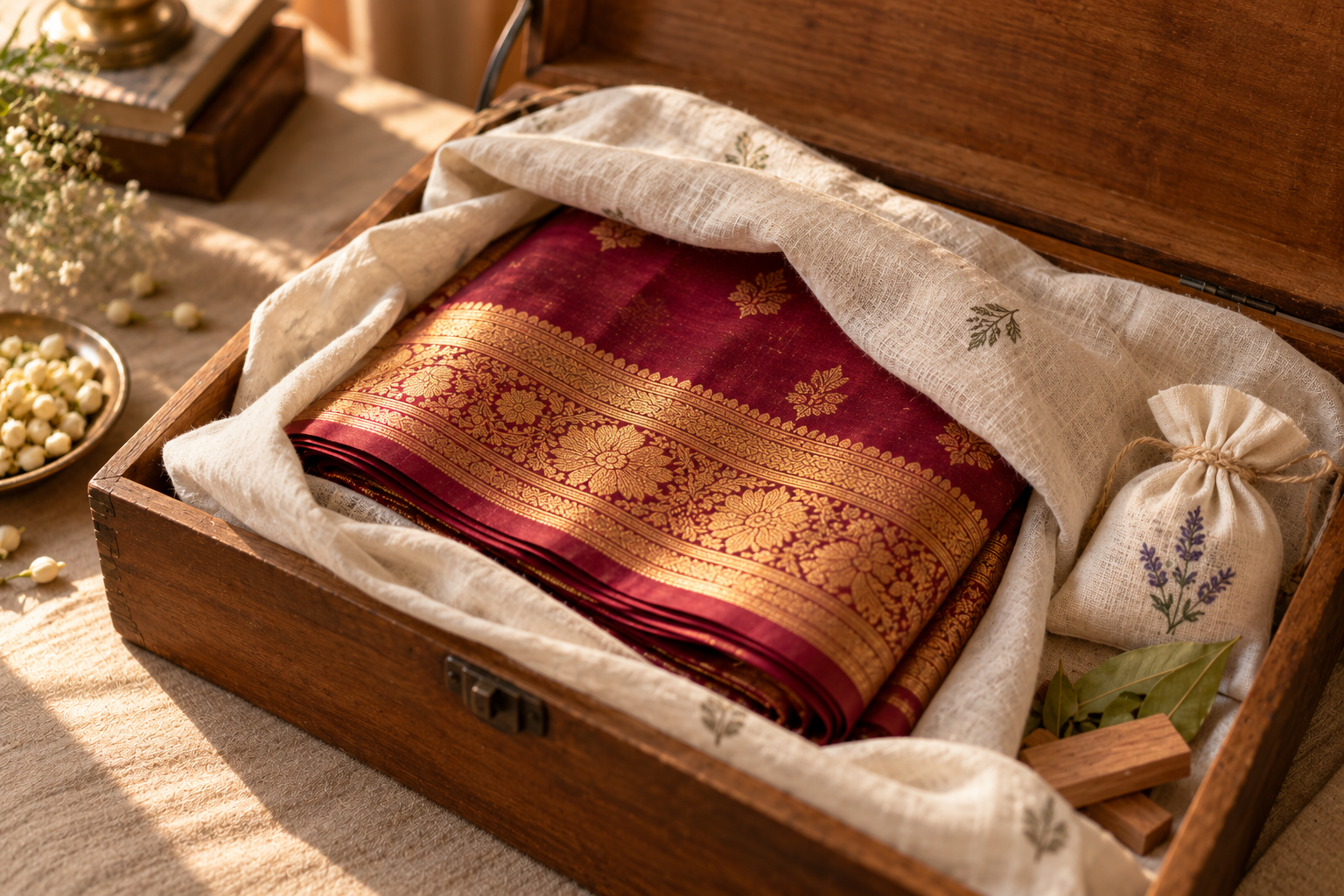
A well-cared-for saree can genuinely last for decades — plenty of the most treasured sarees in Indian households are inherited, not bought new. A few consistent habits make the difference between a saree that fades in a year and one that outlasts you.
There’s something quietly moving about that fact, actually — a saree cared for properly can end up being worn by a daughter, or a niece, or passed along entirely outside the family, decades after it was bought. Good care isn’t just maintenance. It’s what makes a saree capable of having a second life at all.
Storing Your Saree Between Wears
Fold along different lines each time you store a saree, rather than always creasing the same spot — repeated folding along one line is what causes fabric to wear thin and eventually tear. Wrap silk sarees in a soft muslin or cotton cloth rather than plastic, since plastic traps moisture and can cause discoloration over time. Store away from direct sunlight, which fades color faster than almost anything else.
If you’re storing several sarees together, avoid stacking too many heavy silks directly on top of one another — the weight over time can press permanent creases into the fabric underneath. A shelf with a few sarees per stack, rather than one tall tower, protects the ones at the bottom.
Cleaning: What’s Safe and What Isn’t
Fine silk and heavily embellished sarees are generally safest with professional dry cleaning rather than hand-washing at home, since water and certain detergents can affect dye and embroidery. Cotton and block print sarees are usually more forgiving and can often be gently hand-washed in cool water, though it’s always worth checking the specific care instructions for the fabric and dye technique used [confirm exact care guidance for Shukra fabrics before publishing].
A simple rule that holds up well in practice: if you wouldn’t hand-wash a fine silk scarf at home, don’t hand-wash a silk saree either. When in doubt, a trip to a trusted dry cleaner costs far less than repairing dye damage after the fact.
Folding and Ironing Without Damage
Iron on a low setting and, where possible, on the reverse side of the fabric to protect prints and embellishments from direct heat. Avoid ironing directly over sequins, zari, or embroidery — a press cloth between the iron and the fabric protects delicate work.
A Note on Care Labels
General tips are a helpful starting point, but the most reliable guide is always the specific care label or instructions that come with your saree — fabric blends and dye techniques vary enough that “one rule for every saree” doesn’t quite exist.
Signs Your Saree Needs Attention Now, Not Later
A faint musty smell after storage, small yellowing spots along fold lines, or fabric that feels noticeably drier or more brittle than when you bought it are all signs worth acting on before the next wear rather than after. Airing a stored saree out for an hour every few months, even unworn, catches most of these issues early.
Caring for Zari, Sequins, and Heavy Embellishment
Metallic zari thread tarnishes faster than plain fabric, especially with humidity, so heavily embellished sarees benefit from an extra layer of protection — a muslin wrap plus a silica gel sachet tucked nearby to absorb moisture. Never fold directly across a zari border repeatedly; roll heavily embellished pallus loosely instead of creasing them flat, since sharp folds are what cause metallic thread to crack over time.
Seasonal Care Matters More Than People Think
Humid months are harder on stored sarees than anyone expects — silk in particular can develop faint mildew spots if stored in a damp cupboard through a monsoon season without being checked. Adding a moisture absorber to your storage space and checking on stored sarees a little more often during humid months prevents most of the damage people assume is simply “fabric aging.”
Frequently Asked Questions
Can I machine wash a silk saree?
It’s generally not recommended — machine washing can damage delicate silk fibers and embellishments. Professional dry cleaning is the safer route for most silk sarees.
How often should I refold a stored saree?
Every few months is a good habit, mainly to avoid permanent creasing along the same fold lines and to air the fabric out.
What’s the best way to remove a stain from a saree without damaging it?
Blot rather than rub, act as quickly as possible, and avoid any home stain remedy on silk or delicate prints — take it to a professional cleaner and point out the stain rather than attempting to treat it yourself first.
Give your next saree a long life → Shop the collection
We’d Love to Hear From You
Chapter Two is already taking shape, and we’re building it with people who read all the way to the end of a blog post — which, if you’re here, is you.
Subscribe below and you’ll hear about new sarees, new stories, and new chapters before anyone else does. And if you have a thought, a question, or something you’d like us to write about next, don’t keep it to yourself — we read every message.