
Silk, Block Print, or Folk Art: Choosing Your First Shukra Saree

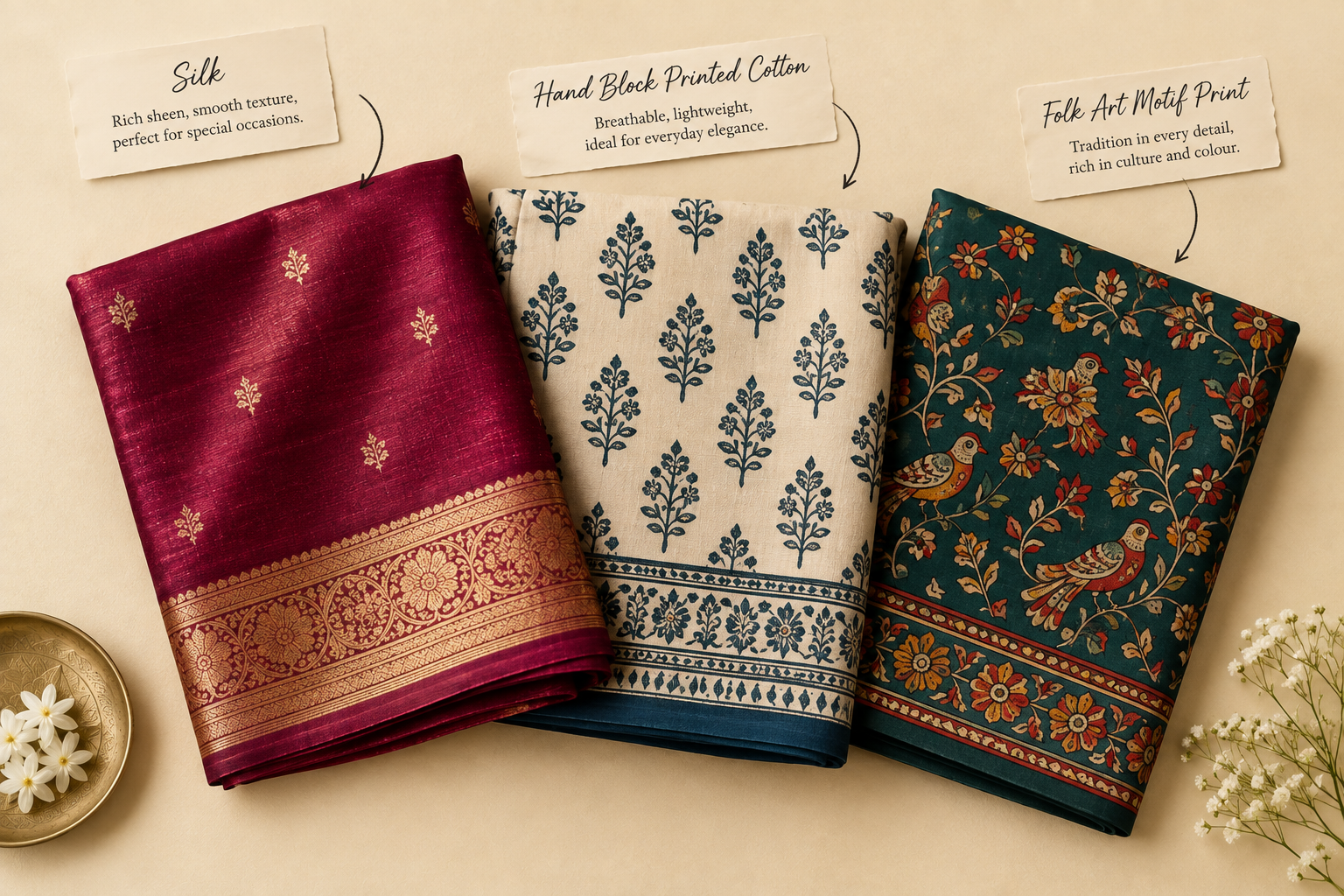
Buying your first saree can feel like walking into a conversation that started without you. Silk or cotton, woven or printed, six colours that all look “nice” on a screen — where do you even begin? Here’s a simpler way in.
Most guides start with fabric care instructions or occasion charts, which is a bit like choosing a car by reading the maintenance manual first. Start somewhere more honest instead.
Start With How You Want to Feel, Not What’s Trending
Skip the “what’s in style” question entirely. Ask instead: on the day you’re picturing yourself wearing this, do you want to feel considered and polished, effortless and light, or a little bit storied and unique? That answer narrows things down faster than any style guide.
Silk: For When You Want to Feel Considered
Silk has weight, sheen, and a kind of built-in formality — it photographs beautifully and holds its drape all evening. It’s the instinctive choice for weddings, festive functions, and any day you want to feel a little more put-together than usual.
There’s also a physical sensation worth mentioning: silk moves differently against the body than cotton does — a slight coolness, a subtle weight in the pleats. Women who’ve worn both often describe silk as feeling more “finished” the moment it’s draped, before a single accessory is added.
Block Print: For Everyday Ease
Lighter, breathable, and unmistakably handcrafted — every block print carries small variations that machine printing can’t replicate. This is the saree for days when comfort matters as much as how you look: work, travel, long family gatherings.
Folk Art: For When You Want a Story on Your Shoulder
Folk art motifs carry centuries of regional craft in a single print — often literally telling a story through pattern. If you want a saree that sparks a conversation rather than just an outfit, this is where to look.
If You’re Still Not Sure
There’s no wrong first saree, but if it helps: most first-time buyers who choose block print end up wearing it more often in the first month, simply because it asks less of them. Most who choose silk end up wearing it less often but remembering the occasion more vividly. Neither is a better outcome — just a different kind of relationship with the piece.
A Simple Way to Decide in Under a Minute
If you genuinely can’t choose, answer one question honestly: is there a specific event already on your calendar you’re buying this for, or are you buying it for the general idea of “having a saree”? A specific upcoming event usually points to silk. A general want points to block print, since it’s the one you’ll actually reach for on a random day before that event even arrives.
What Changes as Your Collection Grows
Most women who start with one saree don’t stop at one for long, and the second and third purchases tend to fill in whatever the first one didn’t cover — a block print buyer often reaches for silk next, and vice versa. There’s no need to plan your whole collection on day one. Buy the one that answers today’s question, and let the next one answer the next.
Frequently Asked Questions
Which fabric is easiest to maintain for a beginner?
Block print cottons tend to be the most forgiving day-to-day — sturdier, less delicate than fine silk, and generally simpler to care for.
Is silk too formal for a first saree?
Not at all — it just tends to suit dressier occasions best. If your first outing is a wedding or festive event, silk is a completely natural place to start.
Can I mix fabrics later, or should my whole collection match one style?
There’s no rule here at all — most saree collections naturally end up mixed, since different fabrics serve different moods and occasions. Think of your first saree as a starting point, not a commitment to one lane.
See all three, side by side → Browse the collection
We’d Love to Hear From You
Chapter Two is already taking shape, and we’re building it with people who read all the way to the end of a blog post — which, if you’re here, is you.
Subscribe below and you’ll hear about new sarees, new stories, and new chapters before anyone else does. And if you have a thought, a question, or something you’d like us to write about next, don’t keep it to yourself — we read every message.