
Wedding Season, Zero Stress: Styling a Shukra Saree for Every Function

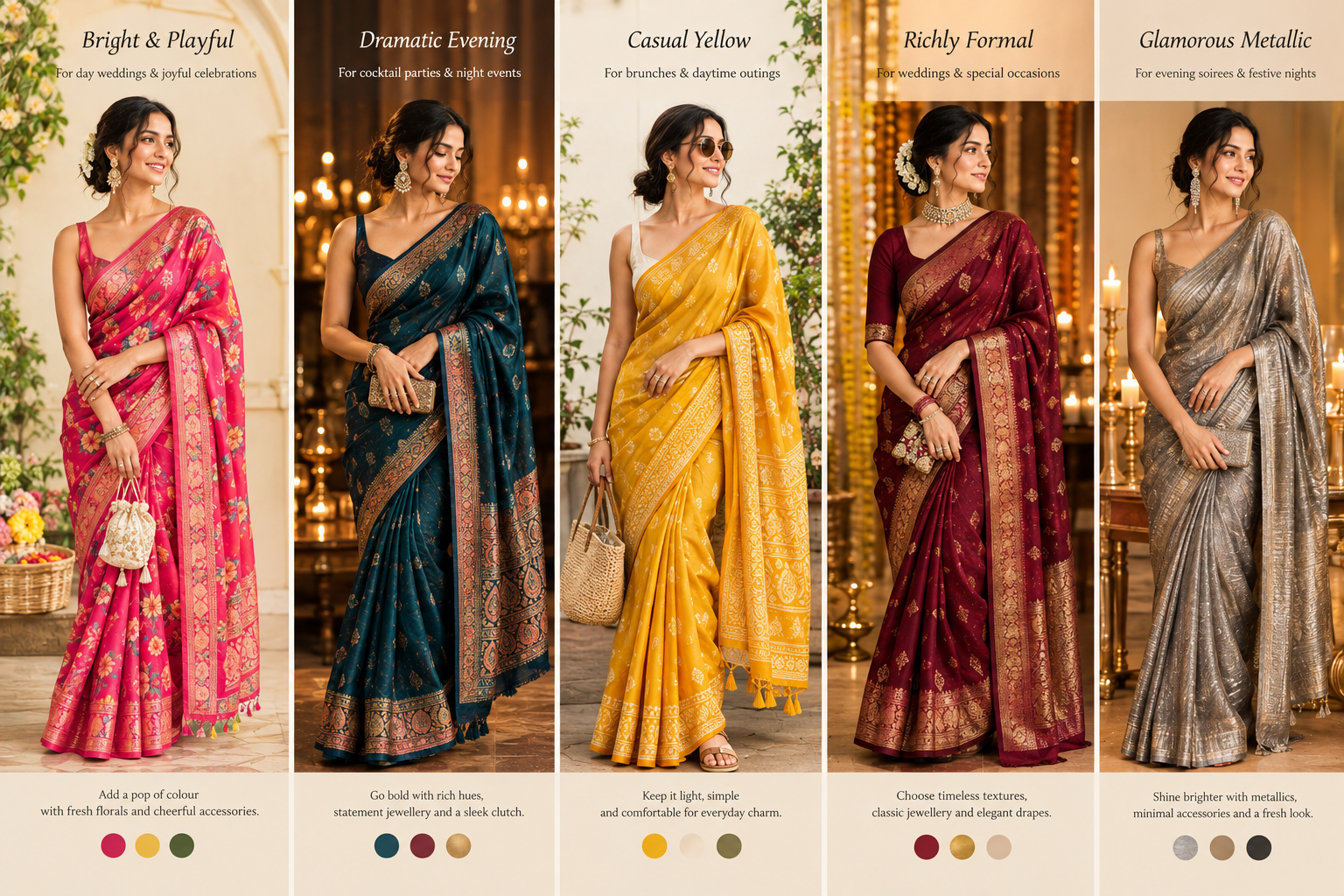
Indian wedding season means multiple functions in a single week, each with its own unspoken dress code — and figuring that out from scratch, function by function, is its own kind of stress. Here’s a simple breakdown.
The anxiety here rarely comes from not having anything nice to wear. It comes from not knowing which nice thing belongs where — showing up overdressed to a haldi, or underdressed to the reception. A little structure removes almost all of that guesswork.
Mehendi
Bright, playful colors work best here — yellows, oranges, fresh greens. It’s a daytime, often outdoor event, so lighter fabrics like cotton or georgette keep things comfortable, and simpler draping holds up better around all that henna.
Sangeet
This is the one function where you can lean into drama — sequins, richer jewel tones, bolder jewellery. It’s an evening event built around dancing, so comfort and ease of movement matter as much as sparkle.
Haldi
Traditionally yellow, and traditionally messy — turmeric paste doesn’t care about your favorite silk. Save the good sarees for later in the week and choose something you won’t mind getting a little marked up.
Wedding Ceremony
The most formal event of the week calls for your richest fabric — silk, with detailed borders or motifs, in deeper jewel tones or traditional reds and golds if you want to stay close to convention.
Reception
Evening glamour is the goal — metallics, deeper colors, statement jewellery, and a saree with a fuller, more dramatic pallu drape for photographs.
Engagement Ceremony
Sits between the ceremony and the reception in formality — rich fabric and color, but slightly less elaborate jewellery than the wedding day itself, since it’s typically a smaller, more intimate gathering. A well-chosen silk in a jewel tone rather than traditional red works especially well here, since it doesn’t compete with the bride’s own colors.
Packing for a Multi-Day Wedding Without Overpacking
If you’re attending every function, you don’t need five entirely different sarees — you need two or three versatile ones and a restyling plan. A bright cotton for mehendi and haldi, one rich silk that can flex between sangeet and ceremony with different jewellery, and one metallic or heavily embellished piece for the reception covers the whole week without a suitcase full of options you’ll never wear again.
Pack each saree with its blouse pinned together in the same garment bag, and keep a small “emergency kit” in your suitcase — safety pins, a stain pen, and a travel-size fabric freshener. Weddings run long and things happen; a five-minute fix beats a change of outfit every time.
What to Avoid Across the Whole Week
Wearing your most elaborate, heaviest piece too early in the week is the most common regret — by the time the actual wedding ceremony arrives, you’re either repeating your best look or your body is simply tired of heavy fabric and jewellery. Save your richest piece for the ceremony or reception specifically, even if a lighter option feels like the “safer” choice for those two events. And avoid anything with delicate embellishment for the haldi or mehendi — turmeric stains and intricate embroidery do not mix.
Comfort Across a Long, Multi-Day Event
The function most people underestimate for comfort is the sangeet, simply because dancing in a saree that isn’t secured properly is how most mid-event wardrobe malfunctions happen. A well-fitted blouse and a properly weighted fall matter more here than at any other function on the list — this is the one night worth prioritizing ease of movement over sheer drama, even if it means a slightly simpler drape than you’d planned.
A Simple Rule If You’re Genuinely Overwhelmed
When the whole week feels like too many decisions at once, sort by formality first and color second — daytime and casual functions get lighter fabric and brighter tones, evening and ceremonial functions get richer fabric and deeper tones. That single sort answers most of the “what do I wear to this one” questions before you even open your closet.
Frequently Asked Questions
Can I repeat the same saree across multiple wedding functions?
Yes, especially if you change the styling — different jewellery, blouse, or draping style makes the same saree feel new at each event.
What should I wear for a daytime function versus an evening one?
Lighter fabrics and brighter, softer colors for daytime events; richer fabrics, deeper tones, and bolder jewellery once the sun goes down.
Is it ever okay to wear white or black to an Indian wedding?
Traditions vary by family and region, so when in doubt, a quick check with the host is genuinely the safest move — but as a general guideline, brighter and richer tones are the more traditional choice for the main ceremony specifically.
Build your wedding-season lineup → Shop the collection
We’d Love to Hear From You
Chapter Two is already taking shape, and we’re building it with people who read all the way to the end of a blog post — which, if you’re here, is you.
Subscribe below and you’ll hear about new sarees, new stories, and new chapters before anyone else does. And if you have a thought, a question, or something you’d like us to write about next, don’t keep it to yourself — we read every message.