
What Is a Pico Fall? The Small Detail That Saves Every Saree

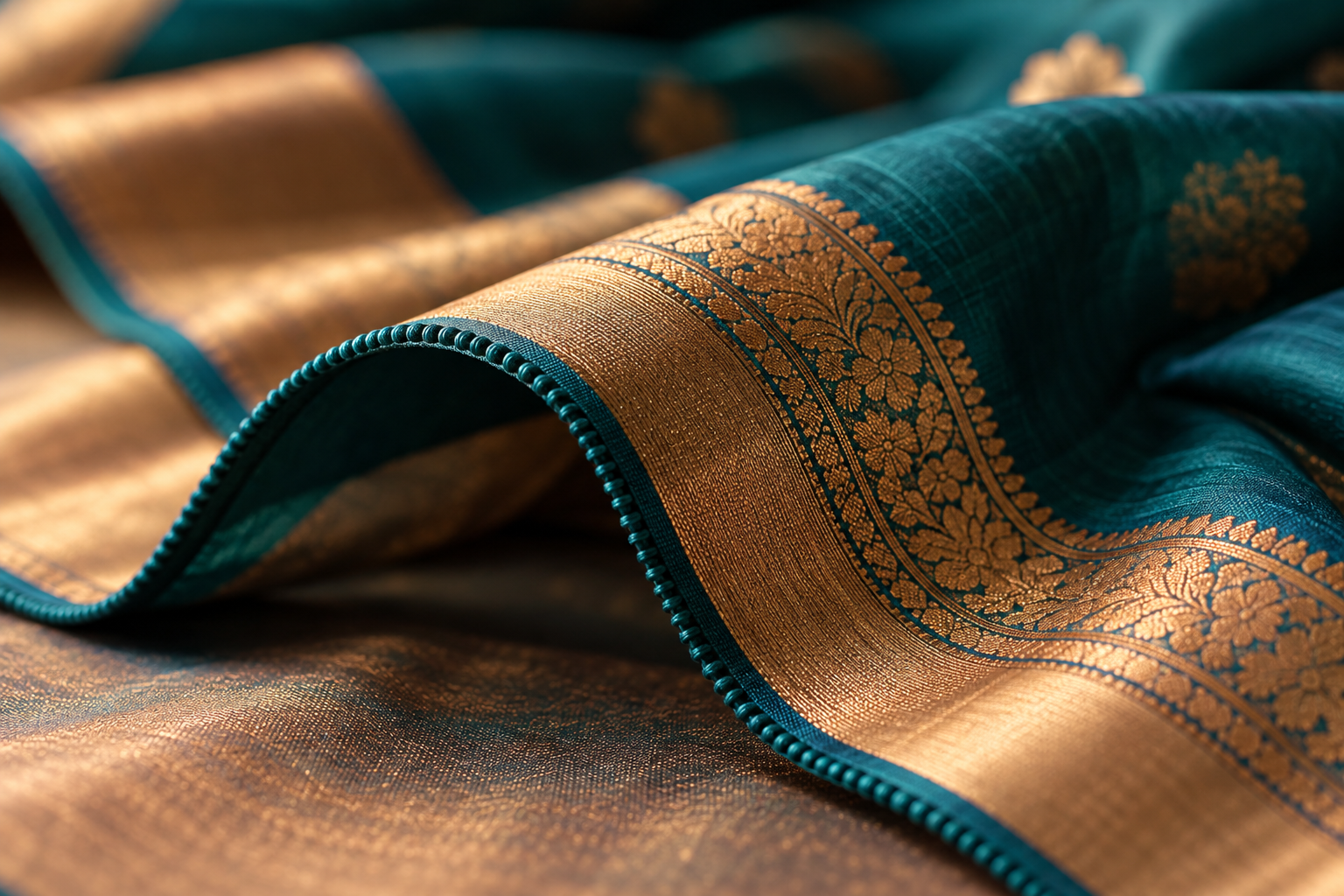
If you’ve ever bought a saree and been told, almost as an afterthought, “don’t forget to get the fall done before you wear it” — this post is for you. It’s one of those small pieces of saree vocabulary nobody quite explains, until suddenly it’s the reason your saree is sitting in a bag instead of on you.
It’s a strange gap, honestly — the saree is one of the most iconic garments in the world, and yet the one piece of vocabulary that determines whether you can actually wear yours this weekend is something almost nobody explains until you’re already stuck.
Saree Terms 101: What Does “Fall” Mean?
The “fall” is a strip of fabric stitched along the inside bottom edge of a saree. Its job is simple but important: it adds weight and structure so the saree drapes cleanly and doesn’t crumple or ride up as you walk. Without it, even the most beautiful silk can look limp by the end of an evening.
Think of it as the difference between a curtain with a proper hem and one without — the fabric is identical, but one falls in clean, straight lines and the other bunches unpredictably. The fall is what turns fine fabric into a fabric that actually behaves.
And What’s “Pico”?
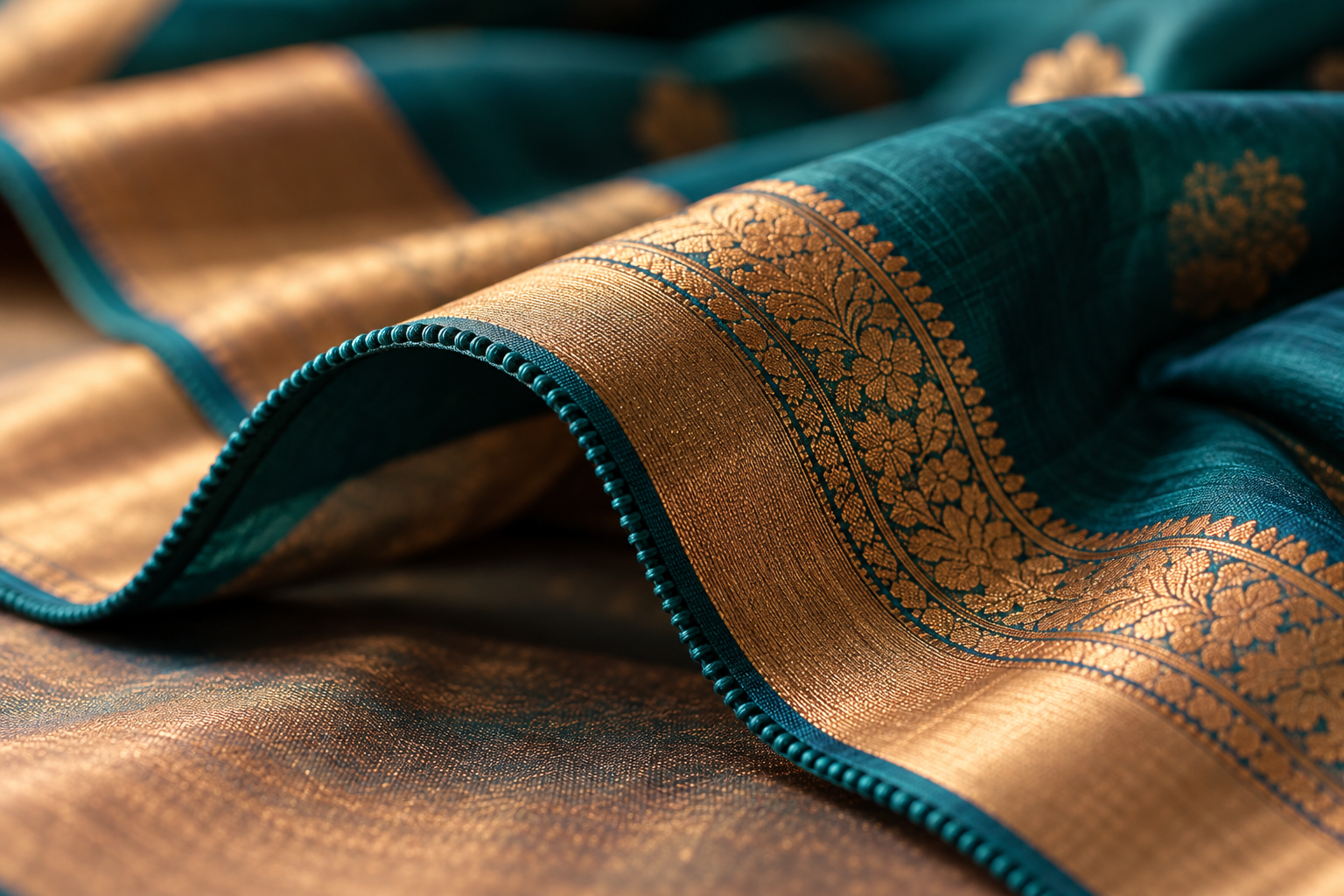
“Pico” refers to the small, tight zig-zag stitch used to finish a saree’s raw edges so the fabric doesn’t fray with wear and washing. Put the two together — a “pico fall” — and you’ve got a saree whose edges are neatly finished and whose drape is properly weighted, straight out of the box.
Why This Tiny Detail Is a Big Deal
Here’s the part that actually affects you: most sarees don’t come with this done. It’s an extra stop — a trip to a tailor or a local boutique, a day or two of waiting, sometimes a small fee — standing between buying a saree and actually wearing it. It sounds minor until you’re the one holding an unfinished saree the night before an event with nowhere open.
It’s a small detail, but it’s exactly the kind of small detail we think about constantly. Every Shukra saree arrives with the pico fall already done, so that particular stress simply isn’t part of your evening. You open the box, and the saree is already the finished version of itself.
How to Tell If Your Saree Needs One
Run your fingers along the bottom edge of the saree, opposite the pallu. If the edge is raw or loosely woven fabric with no additional strip of stitching along it, and the saree feels light and unstructured when you hold it up, it likely needs a fall. If the bottom edge already feels slightly heavier and neatly bound, someone’s already done this step for you.
There’s also a simple movement test: hold the saree up by the shoulder and give it a gentle shake. A properly finished fall makes the bottom hem swing and settle in one clean line. An unfinished edge tends to flutter unevenly and fold back on itself — a small but reliable tell.
What Happens If You Skip It
Technically, nothing stops you from wearing a saree without a finished fall — plenty of women have, in a pinch. But the visible difference is real: the bottom edge tends to curl or ride up slightly as you walk, and over a few wears, the raw edge starts to fray in a way that’s genuinely hard to reverse later. It’s the one finishing step that’s much easier to do before the first wear than to fix after several.
Frequently Asked Questions
Do all sarees need a pico fall?
Most woven and printed sarees benefit from one — it’s what keeps the edges from fraying and gives the drape its shape. Some very structured fabrics need it less, but it’s rarely a bad idea.
Can I get a pico fall done separately if my saree doesn’t have one?
Yes — most tailors and saree shops offer this as a standalone service, though timelines vary, which is exactly the wait Shukra sarees are designed to skip.
How long does pico fall stitching usually take?
Anywhere from same-day to a few days, depending on where you get it done and how busy the shop is — another reason having it finished in advance saves real time.
Does a pico fall change how heavy or warm the saree feels to wear?
No — it adds a small amount of structured weight only along the very bottom edge, which is what helps the saree hang correctly. It doesn’t affect comfort anywhere else in the drape.
Want to see it up close? Browse the collection →
We’d Love to Hear From You
Chapter Two is already taking shape, and we’re building it with people who read all the way to the end of a blog post — which, if you’re here, is you.
Subscribe below and you’ll hear about new sarees, new stories, and new chapters before anyone else does. And if you have a thought, a question, or something you’d like us to write about next, don’t keep it to yourself — we read every message.